 If ambient music is perfectly poised to accompany the vast expanses and isolated feelings of winter, modern composition is tailor-made to express the nuances of spring: apricity, growth and new life. (For those who are curious, we associate electronic music and post-rock with summer and dark ambient and drone with fall; let the conversation begin!)
This season’s selections not only burst into life; they also support life, underlining the strength of human connection, the importance of the environment and the need for the two to intertwine. It’s no surprise that the field is fillld with collaboration, along with tributes to artists from various disciplines. These gardens of sound are ready to burst into bloom.
After a series of vocal albums, Milana Zilnik is releasing the instrumental Into the Ice, Into the Wild, an ivory expedition into cold and snowy climes. We think this should have been a winter release, but Ontario is still cold this time of year (May 1). A similarly snowy cover graces Cécile Lacharme‘s Dérives, but if one squints, one may glean the shape of a large dove. The music is similarly graceful, active as the border between seasons (Bigo & Twigetti, April 29). While the first single from Marta Sanchez‘ For the Space You Left is titled “Frost Bloom,” the track was released in February, perfectly timed with the snow; the first compositions for prepared piano were written in a remote cabin in the heart of winter. The full album brings artist and listener out of isolation (Out of Your Head, April 17).
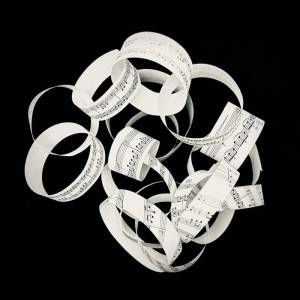 Laur Pihel‘s meditative no na ne EP is short and sweet, almost like hearing the pianist’s thoughts as they unfold on the keys (Schole, March 20). Goodbye Mountain‘s The Mystery of It All is as peaceful as can be, like a walk in the field on a gorgeous spring afternoon. The pianist is accompanied by a small ensemble, including vocalists on two tracks (May 1). Mike Lazarev returns with the tender Gradiscence, a quiet and often melancholic EP. If one concentrates, one can hear the spaces between the piano keys (Bigo & Twigetti, April 17). Also on Bigo & Twigetti, Violeta Vicci & Bruno Bavota team up for the encouraging Be Human, a celebration of human connection and an expression of the artists’ immediate alchemy (May 8); BK Pepper merges piano with orchestral sounds and occasional beats on Pagan, preceded by the flowery Common Ground (April 24); Tony Woolland offers a tribute to the moon on The Moon on the Istrian Riviera, Pt. I, which includes a track originally played by Curve Ensemble (April 10); Fiona Brice wraps herself in Think Loops, a cheerful, five-part, mini-suite; and Wilson Trouvé returns with Hidup, preceded by the single Cinta. The lovely cover image graces this article (June 26).
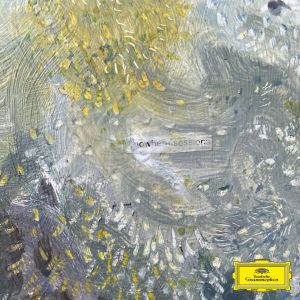 LEITER’s compilation Piano Day: Places is a perfect way to celebrate the 88th day of the year. With contributions from Felicia Atkinson, Viktor Orri Árnason and more, the pedigree is particularly high (March 27). Barry Hudson-Taylor‘s Flutter is sedate and intimate, with miked piano and an emotional undercurrent; the album is a translation of life experience, from the body to the keys (Moderna, March 20). Alberto Giurioli‘s Leftovers “finds meaning in small moments,” the pianist reflecting each of these on his keys (Decca, May 1). Snorri Halgrimson‘s Nowhere Sessions is endearing and restrained, recorded in an isolated Icelandic cabin surrounded by the natural beauty of lakes and lava (Deutsche Grammophon, May 8).
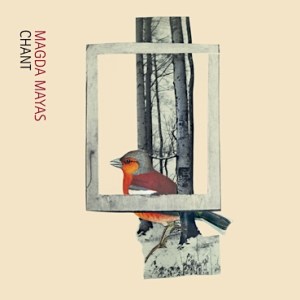 The title Passages XXXIII-XLIII (for Piano, Guitar, and Bass is self-explanatory; the fact that some of the guitar pieces veer into the rock arena is not. No matter what the genre, the latest release from Modern Silent Cinema continues to exhibit a widescreen flair (June 1). Piano and cello intertwine on Glacis with Henrik Meierkord‘s We Gape and Are Healed, a reverent and occasionally mournful set (Whitelabrecs, March 21). Pianist Chris Lippincott makes the most of a string quintet on Angel in a Jetstream, whose soothing tones are dually inspired by Dali’s “Angel of Triumph” and the writings of Hunter Thompson (May 21). Magda Mayas‘ Chant is a work for prepared piano: three long pieces that come with radio edits, although we recommend the full versions. The cover image is a reminder that spring is almost here, and will be in full bloom by the time the album drops (Unsounds, May 15).
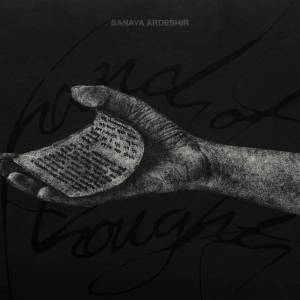 Pianist Sanaya Ardeshir explores female kinship, generational connections and Buddhist teachings on the expressive Hand of Thought, whose title recalls Kosho Uchiyama. The artist is also known as the electronic producer Sandunes (Karigar, March 27). Classical guitarist, pianist and electronic artist Sasha Sayman (who records under various aliases) is set to release the Prague EP on March 20, prefaced by the singles Between Worlds and “The Tides.” Inspired by Guillaume Logé’s influential Wild Renaissance, Joep Beving offers Liminal as a call for humanity to rediscover its connection to – and responsibility for – the rest of the natural world (Deutsche Grammophon, March 20). Poppy Ackroyd tricks the ear on her own Liminal, where every sound – even those perceived as beats – is drawn from piano and violin. In Tom Newell’s video for “The Unknown,” one can see the dust dance (One Little Independent, June 5).
Juli Deák expands the idea of what a flute album can be, utilizing tapping, breath and voice. Recorded at the Church of the Immaculate Conception in Budapest, Brisk is incantatory; some might even call it a revelation (thanatosis, April 24). One may not feel ready for a timpani album, but Thomas Stone‘s The Shunned Path is a surprise. Adding contrabassoon and electronics, the composer delves into expressions of timbre, resonance and tone, creating a mysterious allure (MMXXV, April 10). Symbolism and sound converge on Konstantinos Karathanasis‘ Resonant Mythologies, a complex set that tackles the story of Medusa and other compelling narratives. The percussion is especially prominent, to such an extent that the orchestral instruments often play a supportive role (Ravello, March 20).
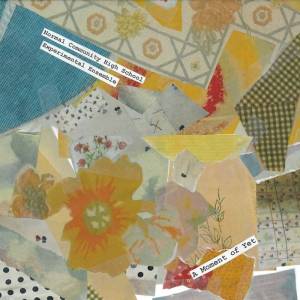 What Is ~Nois, you may ask. One reviewer calls them “the American saxophone quartet du jour,” as if there are 365 American saxophone quartets, which we doubt. We do, however, like how the quartet sounds, stretching their range past modern composition to the realms of rock and dance. The spring theme is a bonus (New Amsterdam, April 10). Saxophone and strings make a lovely pairing on Where Light Settles, recorded live with a 13-piece band. Jasmine Myra‘s music is positive and affirming, just perfect for the season (Gondwana, May 15). From the mature sound of Normal Community High School Experimental Ensemble‘s A Moment of Yet, the future is in good hands. This next generation of composer-performers offers a complex and moving album that is ready to compete with any on the market; surprisingly, this is already their fourth release (Black Flag Bonsai Club, April 17).
“There will come soft rains,” writes Ray Bradbury, “and the smell of the ground.” VLMV takes Bradbury’s poem as a starting point for a string-soaked tribute to spring, aptly named There Will Come Soft Rains (Pelagic, April 24). Simon McCorry cloaks all the important things are now connected with layer upon layer of cello, creating an enveloping sound (Whitelabrecs, March 21). Synth, piano, cello and drums create intricate textures on Yoann Le Dantec‘s Eiloc Nalem, out March 20 on Asymetric Sounds.
John Luther Adams‘s Horizon is patient and sedate, as one might be when waiting for the sunrise. Inspired by Australian landscapes, this extended work is filled with subtle nuance, like the shift from yellow to orange (Cold Blue Music, April 17). Dave Soldier‘s Vipers at the Onyx, performed by the Prague Filmharmonic Orchestra, is highlighted by the premiere recording of Stuff Smith’s “Unfinished Violin Concerto.” We must say, it feels finished now (Bright Shiny Things, April 10).
Maiana de Silva commissions six solo violinists to offer their take on human nature. Brouhaha: Shaped by Fire combines music, archeology and sociology to offer warning and encouragement (Sono Luminus, April 17). Recording as K8A, violinist Kaethe Hostetter channels the eight years she spent in Addis Ababa into Woradj Alle, subtitled Impressions of Ethiopia: for Solo Violin and Electronics. One can hear the honesty in these grooves, along with the gratitude (April 20). Jupiter Quartet‘s Undreamed Shores contains world premiere recordings that “find space for hope and light in challenging times.” We sure could use some of that right now (Orchid Classics, April 17). One can tell that Friction Quartet is having fun just by looking at the cover. Proper Nostalgia presents a quartet of new works from four different composers, but the set is united by a spirit of discovery (Aerocade Music, March 20). Alarm Will Sound celebrates its twentieth year with Lift, which includes startling takes on The Shaggs and Boards of Canada, plus originals (March 20).
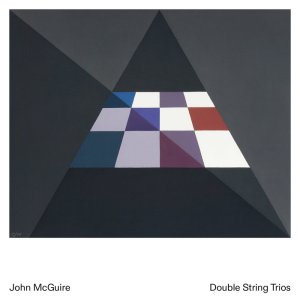 The title of John McGuire‘s Double String Trios may be self-apparent, but the background story is not. The compositions, originally written for synthesizer, were transferred to strings to honor the composer’s 80th birthday. As conducted by Axel Lindner, the works take on a brand new life (Unseen Worlds, March 20). In like fashion, Metropolis Ensemble, Erik Hall and Sandbox Percussion tackle the work of Simeon ten Holt on Canto Ostinato, a set teeming with life, with multiple points of entry. Those who enjoyed Hall’s solo take on the Dutch composer will be enthralled by these new renditions (Western Vinyl, April 3).
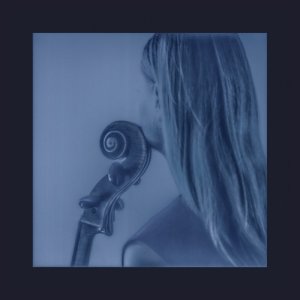 Whitney Johnson, Lia Kohl and Macie Stewart last worked together on Stewart’s 2025 album When the Distance Is Blue. Now they offer BODY SOUND, enhancing viola, cello and violin with tape and voice. The improvisational approach, even the color of the vinyl, are tributes to Yoko Ono (International Anthem, March 20). Cellist Dobrawa Czocher honors the sea on State of Matter, whose blue cover is matched by the title of the first single. Expanding her palette beyond strings, the artist brings the feel of a small orchestra to these intimate workss (FatCat/130701, March 27). Also on the 130701 imprint, Sylvain Chauveau offers the chime-like The Complexity of the Simple, whose very title is the beginning of a philosophical and societal journey (June 5).
 Flore Laurentienne‘s Volume III completes a multi-year trilogy. The album blends piano, orchestra and mini-Moog to produce a sound that is simultaneously classic and modern (Secret City, April 10). Pianist Meg Morley joins Haiku Salut for a gorgeous tribute to the 1930s silent film “People On Sunday.” The Lost Score is in fact a new score, resplendent in tone, bursting with electronic energy (Lo Recordings, March 27). Neil Cowley Trio‘s upbeat Built on Bach is less a remingining than an homage, as these new pieces pay tribute to the classic composer (Hide Inside, April 10). The same holds true for Bach Artillerie, a thorough modernizing of and “absurdist take” on the Goldberg variations and more, transferred to synth and drums by two members of Deerhoof (Ernest Jenning Record Co., April 24).
Puppeteer Tristan Allen is in the midst of an ambitious trilogy, of which Osni the Flare is the second entry. In this installment, a human becomes a deity through the discovery of fire. Wide tonal range amplifies the drama, and the visual angle plays an integral role (RVNG Intl., March 27). New trio Shawn Mativetsky, Amir Amiri, and Sarah Pagé debuts with Metamorphose, which justifies its title by moving through multiple genres, including modern composition and jazz, while using instruments such as tabla, santur and harp to blend east and west (Fifth House, March 20). The 18-strong Brazzmatazz is having a blast, and watching them, we are too. Walk the Plank is the first taste of June’s Crank Up the Pressure, and if the rest is this good, we’re in for a treat (Den Hoed Music)!
Richard Allen