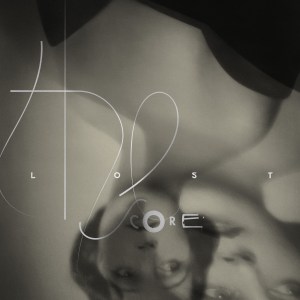
 The Lost Score is not actually a lost score, but a new score to the silent German film “People on Sunday” (1930), whose original soundtrack was classical and operatic. Viewed after a century of perspective, the film is an oddity and in some ways a puzzle. Not a lot happens save for people going about their lives, filling leisure hours with boating and floating, shopping and smoking. The film works its way up to romance, or at least the 1930s version of romance; we flirt differently now, while earlier approaches, marked by gender and behavioral assumptions, seem quaint or problematic. And of course there’s a contrast, impossible to gloss over, between the carefree nature of the 1930s film and the horrifying regime that rose in its wake, one that makes one question everything one is seeing.
One can view the film in numerous places online, although it’s impossible to synch with the new score from Haiku Salut and Melbourne jazz pianist Meg Morley as the movie is 73 minutes long and The Lost Score half its length; one can, however, match track to scene. The main differences are in timbre and mood. The opening synth of “What About Tomorrow?” already seems futuristic in comparison to the original score, while preserving the sense of leisurely fun. One would love to go on a picnic with Morley and Haiku Salut! Mid-piece, the electronics disappear and Morley turns surprisingly tender, as if empathizing with the women of a prior century, or offering an elegy for a lost time, adding nuance to the word “lost.”
By “Needle Drop,” the listener is definitely in modern territory. This piece shows Haiku Salut at their best, highlighting the trio’s percussive intricacy. Morley’s keys push the project to the next level. “Carousel” provides the first indication that this is a score by returning to the electronic patterns of the opener before launching in a different direction.
“Laugh and Cricket” highlights the sense of innocent play, but the rapid-fire “Faces” yields a hint that something may be amiss. We intuit this in the music in the same way as we suspect it in the film: buried beneath the surface, seeping out despite its best efforts, the faces behind the faces. “Toxic” is unlike anything in the 1930 score, an expose that comments through accompaniment. The mid-section approaches post-rock, increasing tension by pausing and restarting the drums. Morley owns the concluding minute, the score’s deepest and most reflective.
The original score, solid as it is, occupies a narrow emotional range. Haiku Salut and Meg Morley deepen and widen the tonal palette, expanding to the fullest on “You Made Sunday” in a cavalcade of brass. Thanks to their contributions, we see the film in a whole new way: perhaps not in the way that it was intended to be seen, but in a way that was there all along. (Richard Allen)