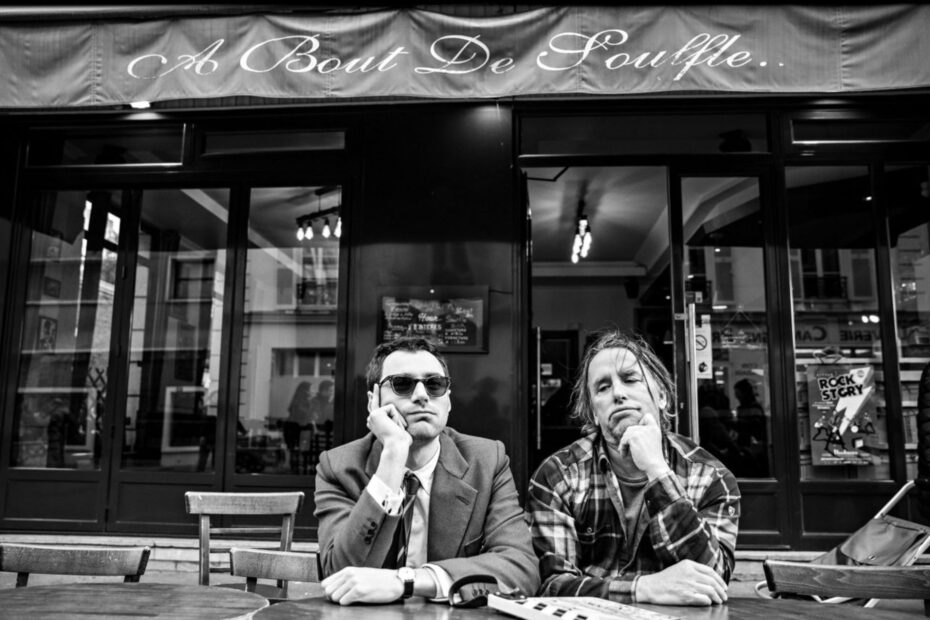
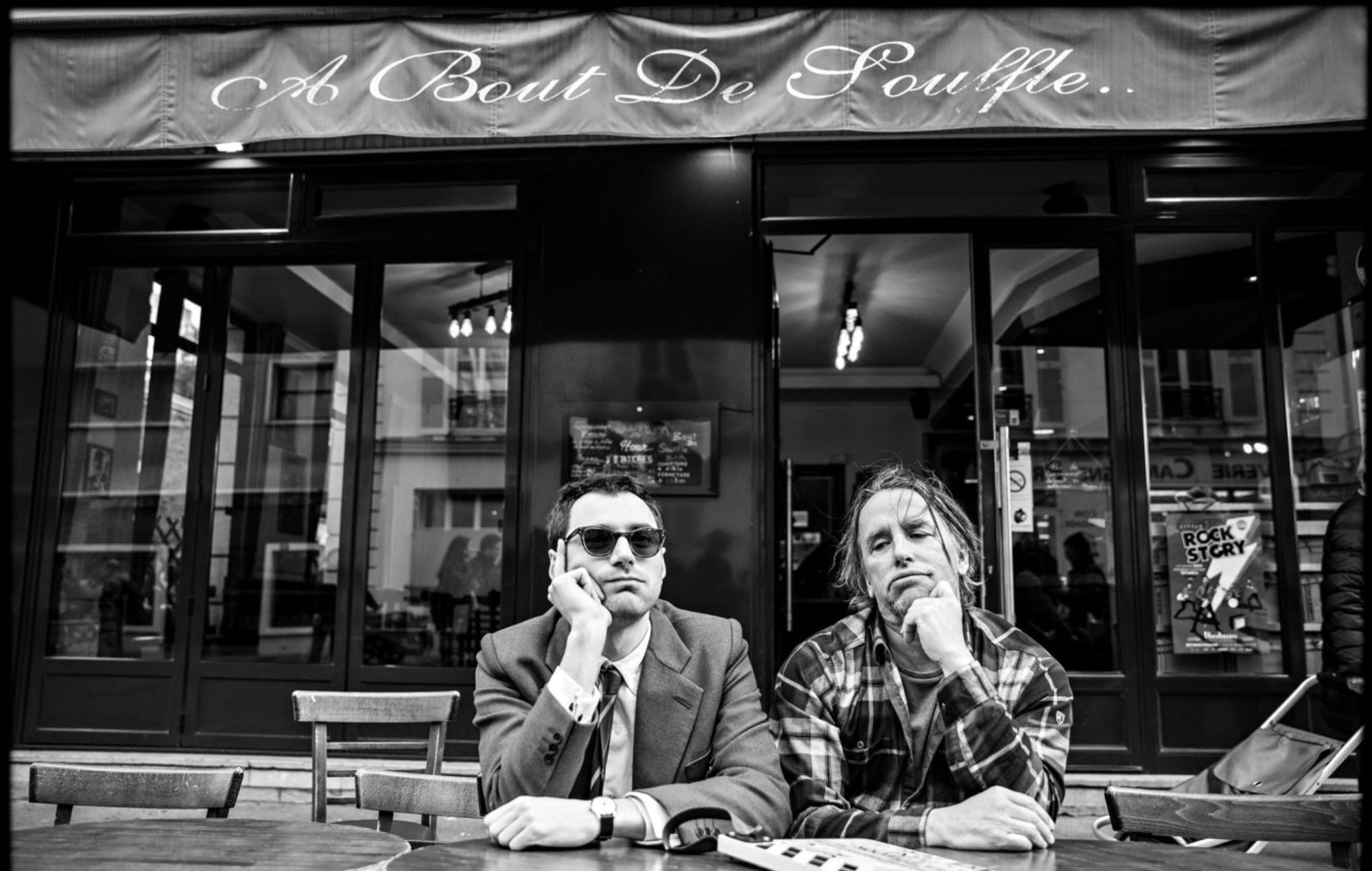
Richard Linklater’s latest two movies concern real-life cultural titans. First, Blue Moon saw an Oscar-nominated Ethan Hawke portray Broadway lyricist Lorenz Hart just after his split from writing partner Richard Rodgers in the early 1940s. Nouvelle Vague, meanwhile, focuses on maverick filmmaker Jean-Luc Godard during the chaotic making of his 1960 masterpiece Breathless.
- READ MORE: ‘Nouvelle Vague’ review: dramatic love-letter to French New Wave is perfect for film nerds
Naturally, Linklater has been wondering what Hart and Godard would make of their on-screen memorisations. “I realised: ‘Okay, Lorenz Hart [who died in 1943] would be thrilled. He would be so tickled that he’s being remembered,” says the godfather of indie films. “And Jean-Luc Godard? He wouldn’t give a fuck!”
Despite being lovingly shot in the style of French New Wave cinema it celebrates, Nouvelle Vague treats Godard with a reverential disrespect – showing a 29-year-old first-time director teetering on the brink of disaster. Never removing his sunglasses, he capriciously packs up work whenever he’s feeling uninspired and regularly drives his star Jean Seberg to frustration. You can see why Mick Jagger, after working with him on the 1968 Rolling Stones film Sympathy For The Devil, called Godard “a fucking twat.”
“Most directors probably go into that book!” laughs Linklater via Zoom from his home in Austin, Texas – a state he’s helped put on the map through his work, including the 1993 coming-of-age classic Dazed & Confused. “It’s that combination of self-belief, swagger and insecurity. Godard was so unique but I told everybody we’re not making a film about a bunch of icons. We’re making it about a group of young people who came together and barely know what they’re doing. They have passion but the odds are against them. I took everybody off their pedestals.”
Nouvelle Vague captures the renegade spirit and ineffable coolness of Godard’s Breathless, reinforcing Linklater’s reputation as the master of meticulously-accurate period details and making the past seem fresh.
That extends to the music he selects. Whether it’s Ethan Hawke extolling the virtues of Wilco to his patently-uninterested son in his 2014 magnum opus Boyhood or the baseball-playing jocks euphorically singing along to The Sugarhill Gang in 2016’s ‘80s-set comedy Everybody Wants Some!!, he nails the specific feeling of what music means to his characters.
When pushed, Linklater cites the latter moment, where the short-shorts-clad bros cruise to a bar, joyously nailing every word of ‘Rapper’s Delight’, as his favourite sync. He made the cast – including a young Glen Powell – learn the entire rap. “I remember my friends and I doing that in a car, driving around, each taking turns on the mic,” he recalls.
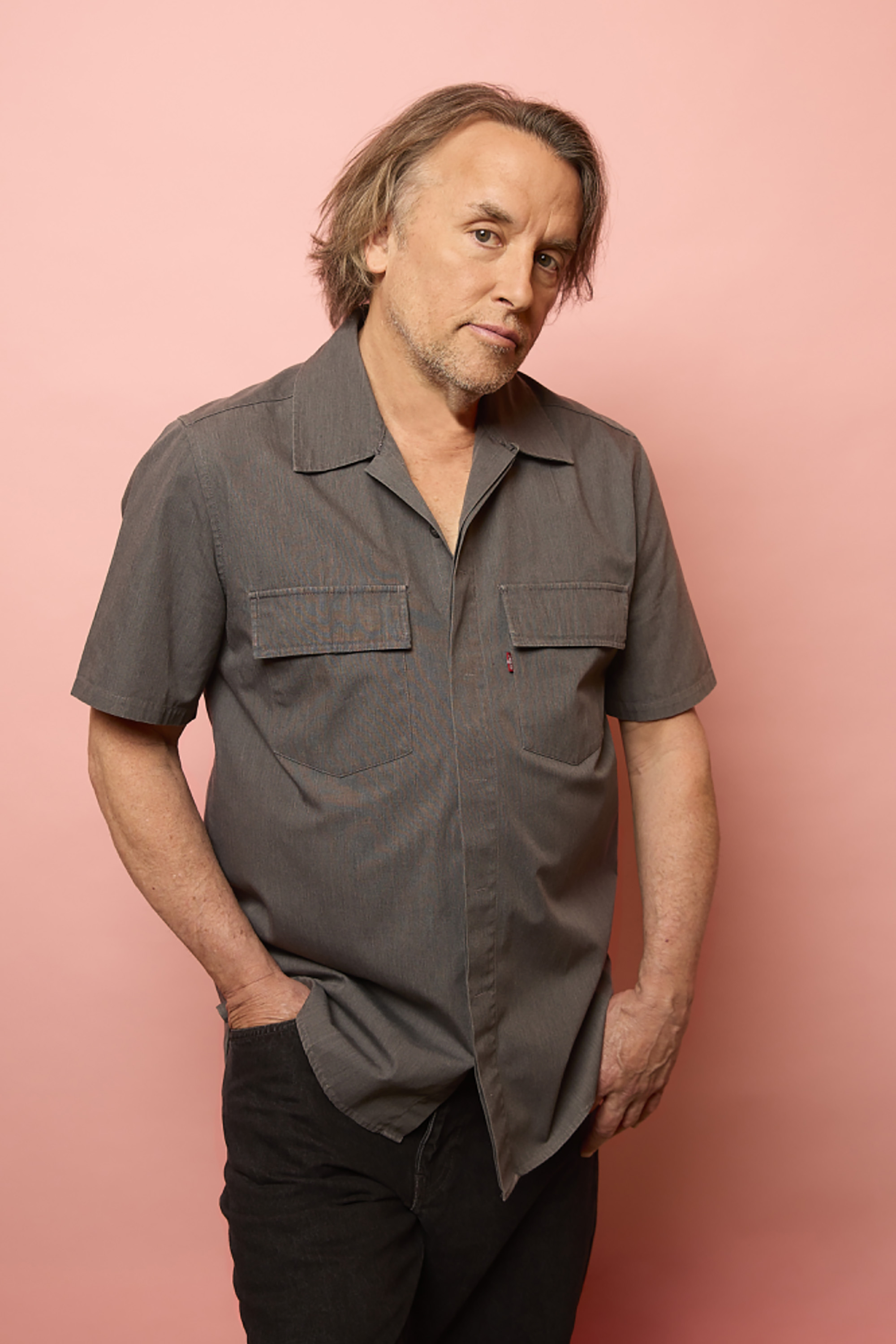
Since his game-changing 1990 debut feature Slacker, Linklater has been behind plenty of on-the-money needle drops. The ‘70s-based Dazed & Confused was soundtracked by the adrenalised riffs of classic rock titans Black Sabbath and Aerosmith. For the cast, Linklater curated mixtapes as the main key to unlocking their characters. Linklater quotes a lyric from Arcade Fire’s ‘Suburban War’ to explain his process – “The music divides us into tribes”.
“Your social cohesion is based around music,” he offers. “It’s such a big deal in your life. So I would tell the characters: ‘Oh yeah, you wouldn’t like that band, but here’s what‘s cool’, and I remember the actors really digging into that.” He repeated the same trick in 2016’s Everybody Wants Some!! but discovered a different generation of actors. “I gave them [a list of bands] and they said: ‘Yeah, I’ll just Spotify all that.’”
As a scion of alt-culture, he’s worked with plenty of indie groups. For 1996’s hang-out movie SubUrbia, he enlisted Sonic Youth to score material. “I’m usually more of a needle-drop guy but it was a great opportunity. They’re one of the great bands of the ‘80s and ‘90s. Whenever they’d come to Austin, we’d go and see them, so it was cool they were in the studio making Sonic Youth songs for my movie.”
“It was so stupid and immature of me to call Robert plant ‘a pathetically aging rock star’”
Similarly, when he wanted to ramp up the dystopian paranoia in A Scanner Darkly – his 2006 adaptation of a Philip K. Dick novel – he turned to Radiohead, who approved the use of four tracks. “Radiohead are the best because they said: ‘It’s not about the money,” Linklater recalls of his low-budget flick. “They just wondered: ‘Is this something we would want our music to be in?’ Thom Yorke was so convinced, he sent over unreleased solo track ‘Black Swan’ for inclusion. “I love him for life for being so generous with me,” beams Linklater.
When Linklater unleashed School Of Rock, which sees Jack Black’s slacker guitarist forming a band with school kids to win a battle of the bands, it became a phenomenon. Even Noel Gallagher commented on how his kids were obsessed by it.
“It happened almost immediately after release,” says Linklater. “People were telling me their kid bought a guitar or drum kit after watching the movie.” Linklater was on a quest to assemble a real band. “I said: Forget the acting, I just want to get the band and then I’ll get the performances out of the kids. I was insistent because I wanted musicians to look at it and go: ‘Those kids are pretty good. They’re not faking it.”
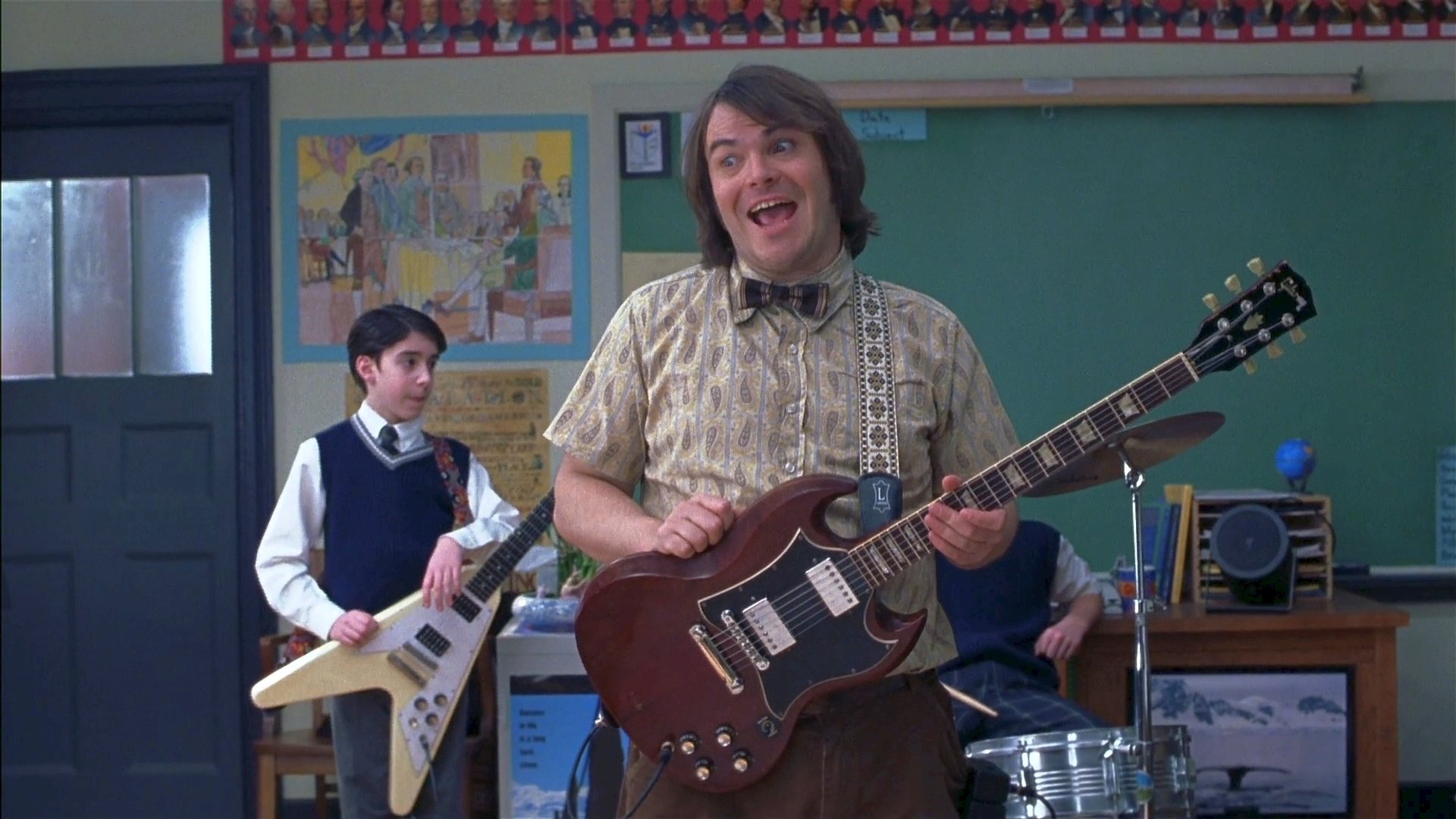
Aside from gaining props from rock gods such as Ozzy Osbourne, School Of Rock also represented a full-circle closure for Linklater when the notoriously sync-averse Robert Plant allowed Led Zeppelin‘s ‘Immigrant Song’ to appear in the movie. A decade earlier, Plant had blocked Zeppelin’s music from being used in Dazed & Confused. Linklater called him a “pathetically aging rock star,” in response. “I’ll boycott Plant for life. Even if he wasn’t involved in the decision, he’s responsible for the assholes around him.”
“It was so stupid and immature of me,” Linklater reflects today. “I was embarrassed about it.” And the final kicker? “As they cleared ‘Immigrant Song’ [for School Of Rock], I was told ‘Tell Linklater that ‘asshole in the office’ still works here’,” he hoots. “So I feel like I’m still on eggshells with my heroes. My fault! The lesson? Don’t be a big-mouth punk!”
If Linklater is the master at finding the perfect cut to accompany milestones, Boyhood was his “most unique” challenge. Filmed over 12 years, he followed Ellar Coltrane’s Mason in real-time from age six to 18. With a soundtrack featuring The Hives’ ‘Hate to Say I Told You So’ and Cobra Starship’s ‘Good Girls Gone Bad’, we experience period-signifiers the way those characters would. “Those songs have made more money off Boyhood than I ever have!” he laughs. “So much of the music in my movies is coming out of my own taste and experience. But I wanted this to be the POV of a young person growing up in this century.” The music was added after the film was completed and he asked his young nephews what they were listening to during particular summers.
Despite a few bands such as Weezer refusing their songs be used, Wings had no problem being on the soundtrack – leading to a memorable ‘Band On The Run’ family-connection where Mason’s dad [played by Ethan Hawke] curates a CD of post-Beatles solo cuts for his son’s 15th birthday. That ‘Black Album’ was actually a real compilation gifted by Hawke to his daughter Maya. “That was all Ethan’s taste,” says Linklater.
One of the most affecting moments is when a grown-up Mason heads to college, soundtracked by Family Of The Year’s ‘Hero’. Leaving behind his mother’s empty-nest turmoil, its lyrics (“So let me go/ I don’t want to be your hero”) pack a punch. “At first I thought it was a little on the nose, but it’s perfect for the end of the movie,” says Linklater.
Whereas Boyhood spanned 12 years of filming, Merrily We Roll Along – his ambitious reverse time-lapse Stephen Sondheim musical with Paul Mescal in the role of the composer – will take 20. “Paul has to work on his piano number for the next episode,” says Linklater.
For now, however, he’s hoping Nouvelle Vague inspires a punk do-it-yourself attitude. “Just like how in School Of Rock I wanted to make it look like it’s fun to be in a band, I want people to watch Nouvelle Vague and think it’s exhilarating to make a movie – to get a group of your friends together, do something cool, and see what happens.”
‘Nouvelle Vague’ is in UK cinemas now
The post Needle-drops and beefing with Robert Plant: how Richard Linklater uses music in his indie masterpieces appeared first on NME.